
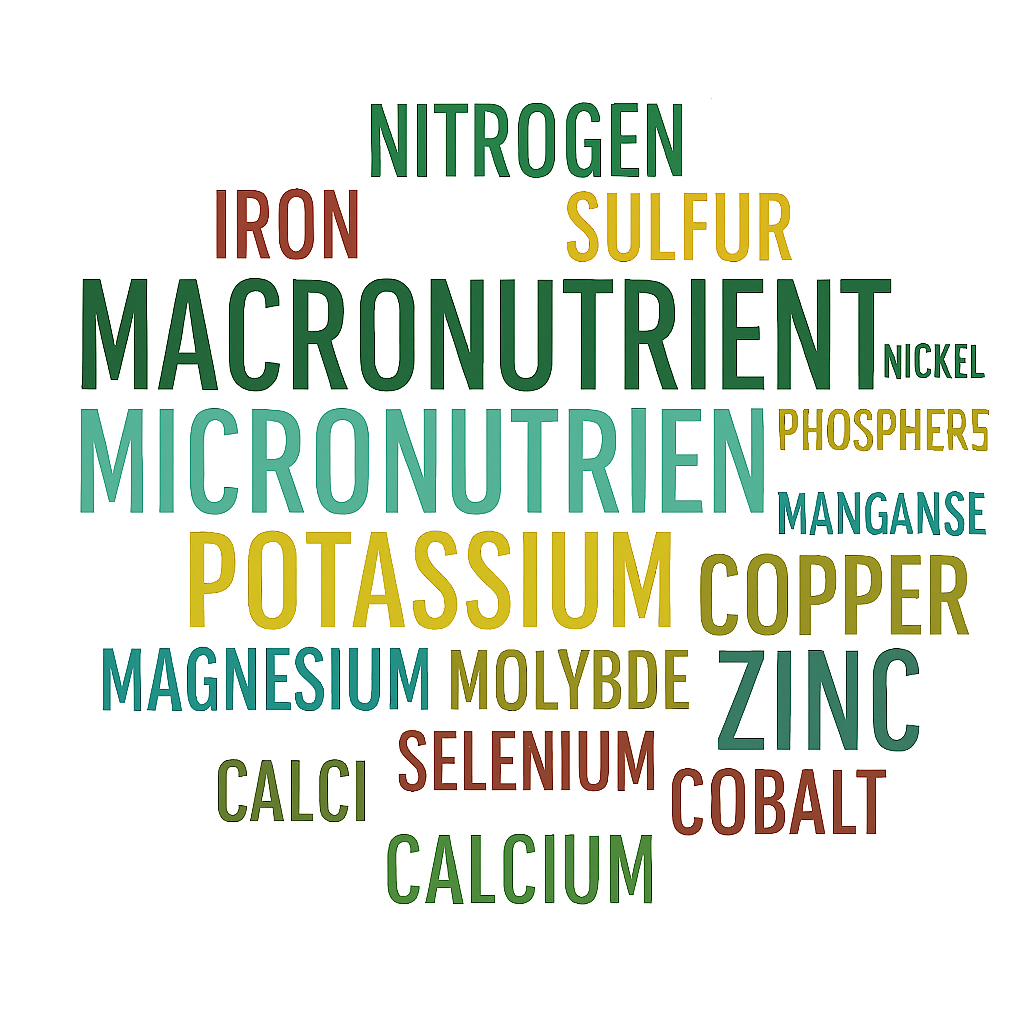
Biological wastewater treatment is powered by microorganisms. Just like us, these tiny workers need a balanced diet to stay healthy and perform their job—breaking down pollutants. Their diet consists of macro-nutrients and micro-nutrients, each playing a vital role in keeping the system stable and efficient.
Macro-Nutrients (Nitrogen & Phosphorus)
Macronutrients are required in relatively large quantities. They serve as the primary building blocks for microbial growth and cell structure. A well-balanced aerobic biological system often follows the BOD:N:P ratio of 100:5:1.
| Nutrient | Primary Role in Wastewater Treatment |
|---|---|
| Nitrogen (N) | Essential for synthesizing proteins, enzymes, and nucleic acids (DNA/RNA). Crucial for microbial cell growth (biomass). |
| Phosphorus (P) | Key component of nucleic acids and phospholipids (cell membranes). Vital for energy transfer in cells, mainly as ATP (Adenosine Triphosphate). |
Micronutrients (Trace Elements)
Micronutrients are required in small amounts, but they are indispensable. They act as enzyme cofactors, enabling the complex biochemical reactions that drive biodegradation. Even slight deficiencies can slow down or halt treatment efficiency.
| Nutrient | General Role in Biological Processes | Anaerobic Digester Specific Role |
|---|---|---|
| Iron (Fe) | Component of cytochromes and iron-sulfur proteins; crucial for electron transport in respiration. | Promotes methanogenesis and reduces H₂S toxicity by forming iron sulfide. |
| Magnesium (Mg) | Enzyme cofactor in ATP reactions; stabilizes ribosomes and cell membranes. | Supports enzyme activity in acetogens and methanogens. |
| Sulfur (S) | Builds amino acids (cysteine, methionine) for proteins and enzymes. | Required by sulfate-reducing bacteria (SRB). |
| Manganese (Mn) | Cofactor for multiple metabolic enzymes. | Supports microbial metabolism. |
| Copper (Cu) | Component of oxidases; aids electron transfer. | Supports microbial metabolism. |
| Zinc (Zn) | Cofactor for enzymes in DNA/RNA synthesis and protein regulation. | Key for methanogenic enzymes. |
| Nickel (Ni) | — | Cofactor for enzymes in methane production (e.g., coenzyme F₄₃₀, hydrogenase). |
| Cobalt (Co) | — | Essential for Vitamin B₁₂ synthesis, a cofactor for methyl-coenzyme M reductase (final step of methane formation). |
| Molybdenum (Mo) | — | Cofactor for enzymes in methanogenesis and Nitrate Reductase (denitrification). |
| Selenium (Se) | — | Cofactor for enzymes in methanogenesis. |
Why Anaerobic Digesters Need Extra Care
Anaerobic digestion (AD) relies on a specialized microbial community, including methanogens. For these microbes, trace elements like Nickel (Ni), Cobalt (Co), and Molybdenum (Mo) are especially critical. Deficiencies in these metals are one of the most common causes of digester instability or failure.
Key Takeaway
Microorganisms in wastewater treatment are living systems. Just as farmers feed crops, operators must feed microbes the right nutrients. Balancing macro- and micronutrients ensures efficient pollutant removal and stable system performance.